
You open new hope in autism treatment when you respect ABA and speech, yet admit behaviour alone can’t fix what’s going on under the hood. Many autistic kids face oxidative stress, cell damage from reactive molecules, and low glutathione, the body’s master antioxidant. That’s where real food nutrition, quality fats, and targeted glutathione support, such as cysteine-rich whey protein tested in proper placebo controlled trials, come in. This gives you a science-backed way to support the brain, not just the behaviour, and discover what’s now possible.
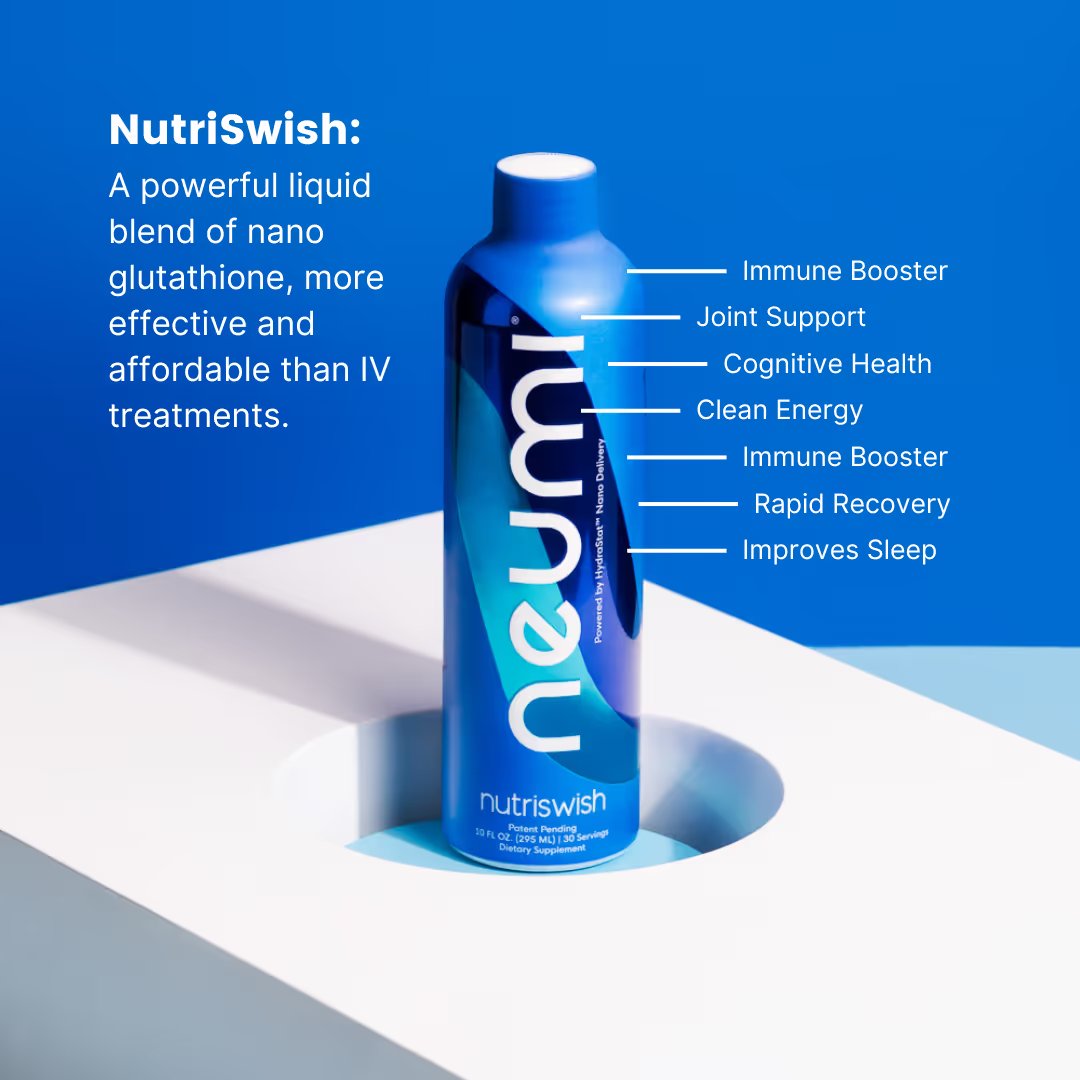
When you look at healthy foods or lowering inflammation, include quality stable fats such as fats from grass-fed animals, coconut oil, avocado oil and olive oil. For detoxifying or reducing oxidative stress, consider glutathione and talk to your practitioner about Neumi Nutriswish glutathione with HydroSTAT technology.
Key Takeaways
Combining behavioral therapies with biological supports addresses both skill development and the underlying brain–immune–metabolic issues, providing more lasting benefits than behavior alone.
Nutritional strategies prioritising real foods and stable fats help stabilise inflammation, energy and mood, supporting learning, attention and flexibility.
Addressing oxidative stress and low glutathione with targeted nutrients and supplements may improve cellular health, detoxification and potentially behaviour.
Evidence-based supplements like cysteine-rich whey protein and advanced glutathione formulations show promising results in rigorous, placebo-controlled autism trials.
Ethically integrating diet, supplements and therapy within monitored clinical frameworks offers realistic, scientifically grounded hope for improved outcomes in autism.
Autism Today: Limits of Behavior-Only Treatment
How far can you really go with behaviour therapy alone when autism is rooted in the brain, the immune system, and even basic cell chemistry? You care about skills and independence, so you customise to ABA, speech, and OT. They matter. They teach communication, reduce dangerous behaviours, and support families. But they hit a ceiling. They don’t correct neurologic signalling glitches, immune activation, or metabolic bottlenecks that shape attention, mood, and flexibility. You observe this phenomenon when progress halts, even with flawless consistency. Behavior alters expression, not the fundamental circuitry. If biology keeps pushing one way, behaviour plans keep fighting uphill.
Behaviour therapy builds skills, but without addressing biology, progress often plateaus and everyday life stays harder than it needs to be
If you're aiming to help beyond traditional behaviour approaches, you might consider strategies that support healthy biology alongside behaviour work. This can include ensuring the quality of fats in the diet and choosing stable fats such as fats from grass-fed animals, coconut oil, avocado oil, and olive oil. These fats can support overall energy, brain function, and inflammation balance. Biological factors underpinning learning and regulation play a crucial role in how well behavioural strategies can translate into lasting change, and addressing them can complement skill-building.
In practice, a comprehensive approach brings together targeted therapies and biological support, tailored to the individual. This recognises that while behaviour plans are essential for development and daily function, understanding and addressing underlying biology can help create more sustainable progress. For a broader framework of this approach, explore Autism Treatments.
Oxidative Stress in Autism: What It Is and Why It Matters
Oxidative stress is a very concrete issue in autism: it happens when the body’s cleanup systems can’t keep up with the constant production of reactive molecules that damage cells. You see this as an imbalance between free radicals and the body’s antioxidants.
In many autistic children, those defences run low, so everyday metabolism creates more wear and tear on brain and immune cells. That strain can disturb signalling, energy production and even how neurons connect. For a deeper understanding of how glutathione status affects these processes, see Glutathione And Autism.
You’re not just managing behaviour; you’re supporting a biology that's literally under chemical pressure.
If you’re aiming to support healthy nutrition and reduce inflammation, consider incorporating quality stable fats such as fats from grass-fed animals, coconut oil, avocado oil and olive oil.
When it comes to detoxifying or lowering oxidative stress, one option to discuss with a healthcare professional is Glutathione, including Neumi NutriSwish glutathione with Hydrostat technology.
This can help bolster the body’s antioxidant defences.
People are individuals, so approaches that feel workable and respectful of growth and development tend to be the most helpful.
Glutathione supports mitochondrial health and neural protection, which are especially relevant when considering oxidative stress in autism. Glutathione and its role in maintaining redox balance can influence energy metabolism and neurodevelopment.
Glutathione and Redox Balance in Children With Autism
You’ve already seen that oxidative stress places autistic children under steady biochemical strain; glutathione sits right at the centre of that storm. You can think of glutathione as the cell’s master bodyguard, constantly donating electrons to neutralise reactive oxygen species, then flipping between reduced (GSH) and oxidised (GSSG) forms.
Glutathione is your cell’s master bodyguard, shielding against relentless oxidative stress and biochemical strain
In many autistic children, this redox couple skews: GSH drops, GSSG rises, and the GSH:GSSG ratio shrinks. That means weaker detoxification, more damaged membranes and DNA, and tired mitochondria. You’re not just seeing “low antioxidants”; you’re seeing a system that can’t reset itself between hits. For a deeper dive into how glutathione supports cellular protection and redox balance, see The Many Benefits Of Glutathione.
If you want to support detoxification and reduce oxidative stress, consider using glutathione and look into Neumi Swish Glutathione with Hydrostat technology. This approach can help bolster your body's ability to manage oxidative challenges. Hydrostat technology has been described as producing ultra-small glutathione particles to improve absorption and cellular uptake, potentially enhancing effectiveness beyond standard formulations.
Additionally, incorporating quality, stable fats can support overall cellular function. Include fats from grass-fed animals, coconut oil, avocado oil, and olive oil as part of a balanced diet.
This personalised approach can help sustain redox balance and support the body’s natural healing processes. If you have any questions or would like personalised guidance, please speak with a healthcare professional.
What Current Autism Treatments Do: and Where Biology Is Missed
Current autism treatments focus heavily on behaviour, but they often miss the biology driving that behaviour from underneath. You’re told to reinforce eye contact, shape language, track problem behaviours. These matter. But if a child’s cells are under constant oxidative stress, if glutathione is low and redox balance is skewed, you’re coaching behaviour on a biochemical fault line.
Current therapies rarely measure methionine, SAM:SAH ratios, or glutathione status. You feel the gap.
You see effort; you don’t see labs
You manage meltdowns; you miss metabolism
You coach skills; chemistry resists
You serve; science must help
If the goal is to support the child’s health and reduce oxidative stress, consider quality stable fats as part of a balanced approach. Fats from grass-fed animals, coconut oil, avocado oil and olive oil can be useful additions.
When detoxification or lowering oxidative stress is a priority, supporting glutathione can be beneficial. For more on glutathione and its role in detoxification and oxidative balance, see Glutathione And Autism.
Acknowledge the biology behind the behaviours you’re guiding. Measure what matters, and integrate nutritional and biochemical insight with practical strategies that support both mind and body.
Nutrition to Boost Glutathione and Lower Oxidative Stress
Behaviour plans alone can’t refill a child’s antioxidant tank, so it’s time to talk about food and targeted nutrients that actually move glutathione and oxidative stress in the right direction. You serve this child every day; nutrition lets you serve at the cellular level.
You start with real food: colourful vegetables for vitamin C and polyphenols, leafy greens and beans for folate, eggs and meat for B12 and methionine. These feed the methylation and transsulfuration pathways, the biochemical assembly line that builds glutathione.
Add omega 3 fats, stabilise blood sugar, and choose quality, stable fats such as fats from grass-fed animals, coconut oil, avocado oil and olive oil. For essential fatty acids in autism, see Essential Fatty Acids Autism. Limit ultra-processed snacks. Small, consistent choices, big impact.
Customise your approach to include these options where appropriate.
Cysteine-Rich Whey Protein as a Glutathione Booster
Cysteine-rich whey protein, specifically a medical-grade product called Immunocal, stands out as a direct way to support glutathione in children with autism. You’re not simply adding more protein; you’re providing the body with cystine and cysteine, the rare sulphur-bearing building blocks your child needs to manufacture glutathione inside cells.
Immunocal keeps these fragile precursors intact, and your child’s cells convert them through the transsulfuration pathway into glutathione, the master antioxidant that's often depleted in ASD.
You want your child’s brain protected, not constantly under oxidative stress. You’re tired of guessing and want targeted, mechanism-driven support. You’re willing to measure, not just hope, when it comes to biochemical change. You’re committed to giving your child every ethically sound, science-based advantage.
For dietary fat quality, prioritise stable fats from grass-fed animals, coconut oil, avocado oil and olive oil to support overall health.
In short, Immunocal offers a practical, evidence-informed option to support glutathione production through cysteine-rich nutrition, while you pursue a broader plan that includes quality fats and antioxidant strategies.
How Parents Can Safely Evaluate Emerging Autism Treatments
Here is a revised version that follows your guidelines:
Although the autism world can feel full of miracle cures and glowing testimonials, you need a hard-nosed, systematic way to decide what’s actually worth your child’s time, money and nervous system. Start by asking: is there a randomised, controlled trial, with real outcome measures like ADOS or glutathione levels, not just parent surveys? Demand clear safety data, including liver and kidney labs, not hand-waving.
You serve your child best when you:
Ask who funded the study
Check if it's placebo controlled and blinded
Insist on published, peer reviewed data
Walk away when answers get vague
Conclusion
You are not obligated to accept a narrative about autism that focuses solely on behavior. You can ask about oxidative stress, glutathione, and redox balance and how nutrition, cysteine-rich whey, and other targeted supports might fit into your child’s plan. You still need solid data, careful dosing, and medical oversight; this isn’t DIY biochemistry. However, you can request labs, monitor changes, and make adjustments. Small biochemical shifts, repeated over time, can translate into real world gains. That is the hopeful frontier.
You don’t have to accept a narrow view of autism. You can discuss oxidative stress, glutathione and redox balance and how nutrition, cysteine-rich whey and other targeted supports might fit into your child’s plan. Small biochemical shifts, repeated over time, can translate into real-world gains. That is the hopeful frontier.
If you are looking at lowering oxidative stress, consider glutathione and talk about Neumi swish glutathione with Hydrostat technology. You can explore quality fats as part of a healthy plan, such as fats from grass-fed animals, coconut oil, avocado oil and olive oil, to support overall wellbeing. You can also pursue targeted strategies that are supported by evidence and monitored by medical professionals.
You deserve a personalised path that respects your child’s needs. With careful testing, thoughtful dosing, and ongoing communication with your healthcare team, you can move toward meaningful improvements while staying safe and grounded in real data. That is the hopeful frontier.
Frequestly Asked Questions:
What is glutathione and why is it being studied in autism?
Glutathione is a small, naturally occurring molecule that acts as the body's most important antioxidant. In the brain, it helps protect cells from oxidative stress and supports detoxification and mitochondrial function. In autism research, scientists are exploring whether some individuals experience higher oxidative stress or weaker antioxidant defenses, and whether boosting glutathione could support brain health and development. It is not a cure and benefits are not guaranteed for every child.
- Main roles: antioxidant protection, detoxification, maintaining redox balance, and supporting mitochondria.
- Why it matters in autism: some individuals with autism show altered redox status and markers of oxidative stress in blood or urine.
- Reality check: current evidence is early and evolving; glutathione-based strategies are considered experimental in autism and should be discussed with a clinician.
For families curious about this, talk with a pediatrician or pediatric specialist about what tests or assessments might be appropriate and whether a trial is reasonable in the context of overall treatment plans.
Is glutathione a proven treatment for autism? What does the evidence say?
At this time, glutathione itself is not an approved or proven treatment for autism. The research is limited and largely preliminary. A small number of studies using N-acetylcysteine (NAC), a precursor to glutathione, have suggested potential benefits for some behaviors such as irritability in children with autism, but results are not consistent across studies. Larger, high-quality trials are needed to determine who might benefit, the magnitude of any effect, and long-term safety. Glutathione or NAC should not replace established therapies (behavioral interventions, speech therapy, etc.) and should be used under medical supervision if considered.
Key takeaway: there is not yet a consensus or definitive guideline endorsing glutathione or NAC as standard autism treatment.
How could glutathione help in autism at the biological level?
Glutathione helps maintain cellular redox balance and supports detoxification. In neurons, a healthy GSH/GSSG ratio is important for energy production, protection against oxidative damage, and proper signaling between brain cells. Some individuals with autism show signs of oxidative stress and mitochondrial differences, which could affect development and behavior. By boosting glutathione—either directly or through precursors like NAC—the goal is to enhance antioxidant defenses, reduce inflammation, and support mitochondrial function. It is not yet clear which individuals would benefit most or what the real-world impact on core autism features would be.
Important caveat: while the biology is plausible, clinical benefits have not been proven for autism across large, diverse populations.
What biomarkers or outcomes are used to assess glutathione status and treatment response in autism studies?
Researchers use a mix of biochemical, physiological, and clinical measures:
levels of reduced (GSH) and oxidized (GSSG) glutathione in blood or cells, and the GSH/GSSG ratio; activities of related enzymes such as glutathione peroxidase. - Oxidative stress markers: compounds like malondialdehyde (MDA) and 8-hydroxy-2'-deoxyguanosine (8-OHdG) that indicate cellular damage from oxidative stress.
- Clinical outcomes: autism-specific behavior scales and caregiver/teacher reports (e.g., irritability on the Aberrant Behavior Checklist, Social Responsiveness Scale, and global clinical impressions).
- Neurophysiological/metabolic indicators: sometimes mitochondrial function tests or inflammatory markers are examined in exploratory studies or specialized research settings.
Important note: changes in biomarkers do not always align with meaningful clinical improvements, and standardized biomarker panels for autism are not yet established.